
Veneer Wood Sheets | Custom Wood Solutions for Projects

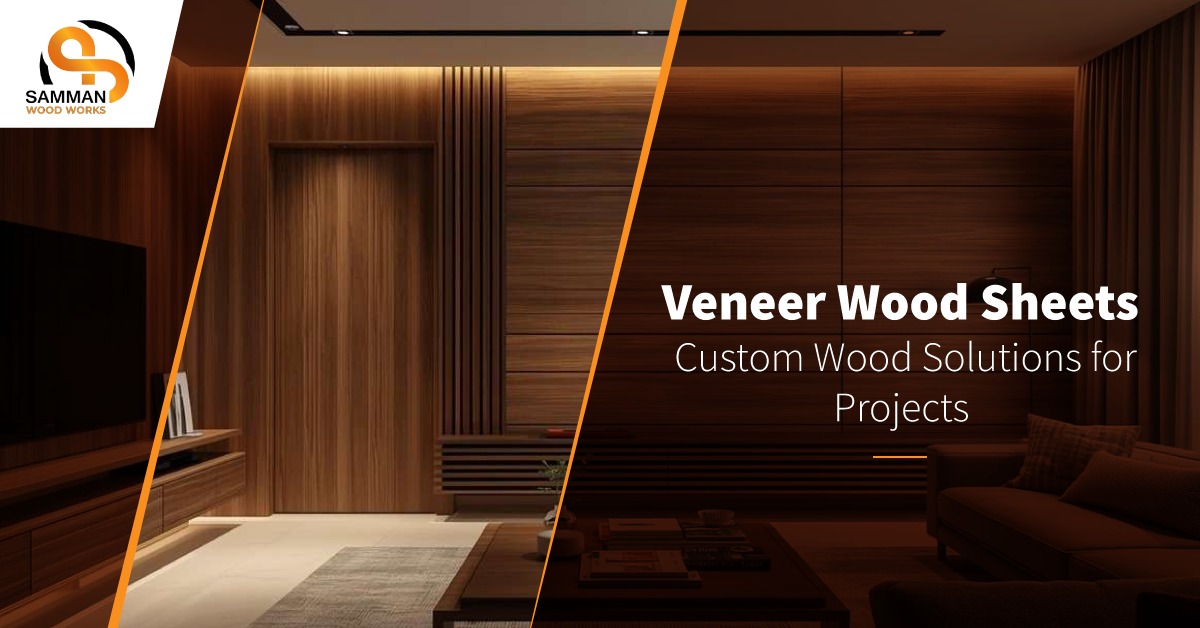
Choosing the right veneer wood sheets can affect the appearance, durability, and overall consistency of a furniture or interior project. In Saudi Arabia, factors such as wood species, sheet thickness, backing type, moisture content, and finishing all need to be considered before placing an order. Whether you need veneer for furniture, cabinetry, hotel interiors, feature walls, or commercial fit-outs, understanding the available options makes it easier to match the material to the application. This guide covers the main types, specifications, sizes, uses, prices, and selection factors to consider when sourcing veneer sheets in Saudi Arabia.
Types of Veneer Wood Sheets
Veneer wood sheets fall into two broad categories: natural and reconstituted.
Natural veneer is sliced directly from a log, so grain patterns are unique to each sheet, sometimes even within the same batch.
Reconstituted veneer is engineered from dyed and reassembled wood layers to produce a consistent, repeatable grain pattern across large orders.
Backing type is another variable worth understanding before ordering veneer for a project. Raw sheets need adhesive applied directly during installation.
Paper-backed and phenolic-backed panels are easier to handle and less prone to tearing, which matters for larger installations with tight timelines.
Some suppliers also offer edge-banding to match, so cabinet doors and panel edges carry the same grain as the face veneer.
Rotary-cut veneer, sliced from a rotating log, produces a wider, more uniform sheet and is often used for less visible surfaces or utility panels where cost matters more than grain character.
Need help selecting the right veneer type? Contact Al Samaan for suitable options.
Read more :How to Install Hardwood Flooring | Expert Installation Guide
Veneer Cuts and Grain Matching: Quarter Cut, Plain Sliced, and Book Matching
The way a log is cut has a direct effect on the appearance of veneer wood sheets. Plain-sliced veneer typically creates cathedral or straight grain patterns, while quarter-sliced veneer produces a more linear appearance with stronger visual consistency. Rift-cut veneer creates a straighter grain with less figure, making it useful for modern furniture and architectural interiors.
Grain matching is equally important when several veneer sheets are installed next to each other. Book matching places adjacent sheets as mirror images, while slip matching keeps the sheets running in the same direction. For large furniture pieces, wall panels, and hotel interiors, the matching method should be agreed upon before production to maintain a consistent visual sequence.
Natural Wood Veneer Sheets
Natural veneer panels carry a character that engineered alternatives cannot fully replicate, including grain movement, color variation, and figure patterns unique to the log.
Common species include oak, walnut, teak, ash, and mahogany, each offering a different grain texture and tone that suits different interior styles.
Quarter-cut and crown-cut slicing methods produce different grain patterns from the same log, which matters when matching panels across a large surface.
Because these panels come from real logs, slight color and grain variation between sheets is normal and should be expected, not treated as a defect.
Buyers who need a perfectly uniform look across a large order should lean toward reconstituted veneer instead, since natural material will always carry some variation.
Looking for consistent natural veneer? Ask Al Samaan about available species and grades.
Veneer Grade, Thickness, Moisture Content, and Quality Standards
The quality of veneer wood sheets depends on more than the wood species. Grade, thickness, moisture content, surface appearance, and consistency should all be checked before approval. Higher grades generally provide cleaner surfaces with fewer knots, mineral streaks, or other natural marks, making them more suitable for visible furniture and decorative panels.
Moisture content should be appropriate for the intended interior environment, while the actual thickness should be confirmed against the supplier’s specification. Buyers should also inspect samples for open joints, surface defects, uneven coloring, and grain inconsistency. For commercial projects, approving a physical sample before bulk production can help reduce discrepancies between the approved finish and the delivered material.
Read more: Professional Wood Manufacturing Company in Saudi Arabia
Veneer Wood Sheets Specifications
A proper specification sheet for veneer sheets should list species, cut type, thickness, backing, and moisture content.
Moisture content typically sits between 6 and 8 percent for interior-use veneer, which keeps the sheet stable once bonded to its substrate.
Grade matters as much as species. A/A grade panels show minimal knots and consistent color, while lower grades carry more natural character marks at a lower cost.
Adhesive compatibility is another detail worth checking, since some backing types bond better with contact adhesive than with cold-press glue systems.
Consultants specifying veneer for commercial projects should request a sample panel bonded to the actual substrate before approving a full order.
Veneer Sheet Sizes and Thicknesses
Standard sheets are commonly supplied in 4 feet by 8 feet panels, roughly 1220mm by 2440mm, though custom sizes are available for larger uninterrupted surfaces.
Thickness ranges from as thin as 0.3mm for flexible decorative work up to 3mm for structural or heavy-use veneer wood sheets.
Thinner sheets suit curved surfaces and detailed inlay work, while thicker panels tolerate more sanding and refinishing over the life of the furniture piece.
Choosing larger veneer sheets reduces visible seams on wide surfaces like conference tables, reception counters, and feature wall panels.
Length and width should always be confirmed against the actual substrate panel size before cutting, since a small mismatch wastes material on a large order.
Read more : Fire Rated Wood Doors: Types, Prices & How to Choose the Best
Veneer Wood Sheets for Furniture and Interior Projects
Furniture makers rely on veneer sheets to achieve a solid wood look at a fraction of the material cost and weight of solid timber.
Cabinet doors, wardrobe panels, and tabletops built with veneer over MDF or plywood substrates resist warping better than equivalent solid wood pieces.
Interior designers use these panels on feature walls and ceiling sections to bring warmth into a space without the cost of full solid wood cladding.
Matching veneer panels across a full furniture set requires ordering from the same production batch, since even the same species can vary noticeably between logs.
Custom furniture workshops often keep a running relationship with one supplier specifically to avoid grain mismatches between separate project phases.
Best Substrates for Veneer: MDF, Plywood, and Particle Board
The substrate underneath veneer wood sheets affects dimensional stability, weight, screw holding, and overall panel performance. MDF provides a smooth, uniform surface and is widely used for cabinet doors, furniture panels, and interior applications where a consistent finish is required.
Plywood can be suitable where greater structural strength or improved resistance to dimensional movement is needed. Particle board is another economical option for selected furniture applications, provided the panel specification and bonding system are appropriate.
The substrate should be selected according to the final application, expected moisture exposure, panel size, and fixing method. Veneer and substrate should also be compatible with the adhesive and pressing process used during manufacturing.
Explore more : Modern Wood Furniture Design in Saudi Arabia
Veneer Wood Sheets for Hotels and Commercial Projects
Hospitality projects use decorative veneer panels extensively across reception desks, guest room paneling, and corridor wall cladding.
Commercial-grade panels need a durable topcoat to withstand daily cleaning and heavy foot traffic in lobbies and shared areas.
Large hotel projects benefit from ordering veneer wood sheets in bulk from a single production run, which keeps grain and tone consistent across dozens of rooms.
Fire performance also matters for commercial fit-outs, since some jurisdictions require fire-retardant treatment on wood veneer panels used in public corridors and exit paths.
Facilities teams should also ask about refinishing options, since high-traffic veneer surfaces in hotels eventually need light sanding and recoating rather than full replacement.
Fire Rating and Moisture Resistance for Veneer Panels in Saudi Arabia
Veneer panels used in hotels, offices, hospitals, and other commercial interiors may need additional performance requirements beyond appearance. Fire performance should be checked against the project’s specifications and the applicable Saudi building requirements, particularly when veneer panels are installed in public areas or other regulated spaces.
Moisture resistance is another consideration for projects exposed to humidity or frequent cleaning. The veneer itself, substrate, adhesive, and surface finish all contribute to the finished panel’s performance. For areas with higher moisture exposure, specify a suitable substrate and sealing system rather than relying on the veneer surface alone.
Before ordering, project teams should confirm the required fire classification, substrate specification, finishing system, and testing documentation with the supplier and project consultant.
How to Choose the Right Veneer Wood Sheets
Start with the substrate. Veneer bonded to MDF behaves differently than veneer bonded to plywood, particularly around moisture resistance.
Match the grade to the application. Show-face furniture needs higher grade veneer than internal panels that stay hidden from view.
Always request a physical sample rather than relying on a photo, since screen colors rarely match the true tone of real wood veneer in person.
Confirm the backing type before ordering, since paper-backed panels install faster but raw veneer offers a slightly more authentic wood feel.
Factor in lead time as well. Custom species or oversized panels often take longer to source than standard stock sizes.
What Affects Veneer Wood Sheets Price in Saudi Arabia?
The cost of veneer sheets depends on several specifications rather than species alone. Common factors include wood type, grade, thickness, cutting method, backing, sheet dimensions, and the quantity required. Natural veneers with distinctive grain patterns or less common species may also have different pricing from standard commercial grades.
Large projects can involve additional costs for grain matching, sequence matching, custom dimensions, fire-retardant treatment, or special finishing requirements. Order volume can also affect the final rate, particularly when a supplier produces a complete batch for one project.
For an accurate comparison, buyers should request quotations based on the same species, grade, thickness, backing, sheet size, and quantity. Comparing suppliers using identical specifications gives a more useful indication of the actual material cost.
Read more : Wooden Furniture Installation Services in Saudi Arabia
Veneer Wood Sheets Price in Saudi Arabia
Prices for veneer wood sheets in Saudi Arabia vary by species, grade, and sheet size, generally ranging from SAR 25 to SAR 90 per square meter for common species.
Rare or exotic species push pricing toward the higher end of the range, while common species like oak and ash sit closer to the lower end.
These figures are market reference ranges, not fixed quotes. Actual pricing depends on grade, backing type, and order volume.
Bulk orders for furniture factories and commercial fit-outs typically bring the per-sheet cost down compared to small retail purchases.
Request a written quote based on your exact species, grade, and quantity before comparing suppliers on price alone.
Why Choose Al Samaan Woodworks Factory?
Al Samaan supplies veneer wood sheets across a range of species, grades, and backing types for furniture makers, contractors, and interior designers.
Every batch is checked for consistent grain match and moisture content before it leaves the factory, so large orders arrive ready to use without sorting through mismatched sheets.
The team works directly with furniture workshops, hotel projects, and villa owners to source the right veneer for each specific application.
Contact Al Samaan for samples and a project quote before finalizing your veneer sheets order.
Choosing the right veneer wood sheets comes down to matching species, grade, and backing to your actual project, not just picking the lowest price per sheet. Al Samaan Woodworks Factory supplies consistent, quality-checked veneer for furniture, hospitality, and commercial projects across Saudi Arabia. Get in touch for samples and a quote matched to your order.
Get the Right Veneer Wood Sheets for Your Project
Need veneer wood sheets for furniture, hotel interiors, or commercial projects in Saudi Arabia? Contact Al Samaan Woodworks Factory to discuss your species, grade, size, and quantity requirements and request a project-specific quote.
FAQ
What is the standard size of veneer sheets?
Most panels are supplied in 4 feet by 8 feet sizes, with custom dimensions available for larger project surfaces.
What thickness of veneer wood sheets should I use for furniture?
Cabinet and furniture work generally uses veneer between 0.5mm and 1mm, while structural applications may need thicker sheets.
Is natural veneer better than reconstituted veneer?
Natural veneer offers unique grain character, while reconstituted veneer provides a more consistent, repeatable pattern across large orders.
How much do veneer wood sheets cost in Saudi Arabia?
Prices vary by species and grade, generally falling between SAR 25 and SAR 90 per square meter as a market reference range.
Can veneer sheets be used in humid areas?
Veneer is not ideal for high-moisture areas like bathrooms unless properly sealed and bonded to a moisture-resistant substrate.
Do veneer wood sheets come with a warranty?
Warranty terms depend on the supplier and application, so always confirm coverage in writing before placing a large order.