
Door Manufacturers in Saudi Arabia | Factory Direct Pricing

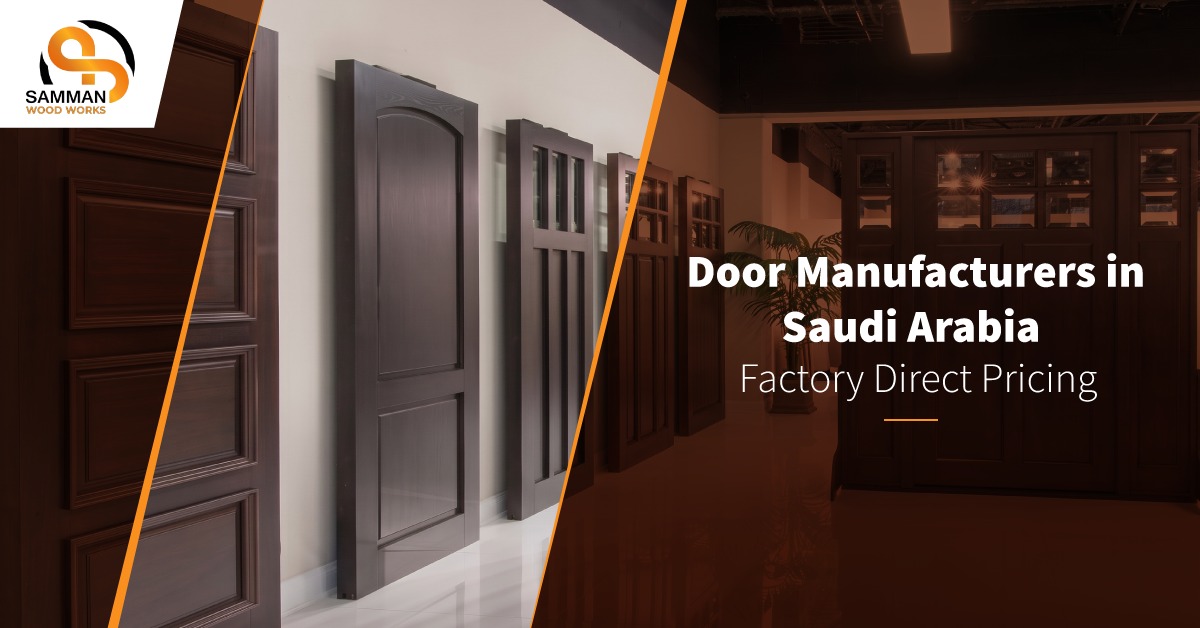
Choosing between door manufacturers in Saudi Arabia involves more than comparing prices or browsing product catalogs. Material quality, manufacturing methods, fire ratings, customization, technical specifications, and production capacity can all affect the final result. Whether you are sourcing doors for villas, hotels, hospitals, offices, or large commercial projects, understanding how Saudi door factories operate helps you compare suppliers more accurately. This guide covers the main door types, materials, manufacturing standards, and key factors to check before placing a project order.
Types of Doors Manufactured in Saudi Arabia
Door manufacturers in Saudi Arabia produce a wide range of door systems for villas, residential buildings, hotels, hospitals, offices, and commercial facilities. The right door depends on the application, required durability, moisture exposure, fire rating, acoustic performance, and overall project specifications.
Wooden Doors
Wooden doors remain widely used in Saudi villas, residential interiors, hotels, and traditional or contemporary proj ects. Manufacturers can produce different designs, finishes, panel configurations, and custom sizes based on the project requirements.
WPC Doors
WPC doors are increasingly used in areas exposed to moisture, including bathrooms, kitchens, and utility spaces. Their resistance to moisture, termites, and warping makes them an alternative to traditional wood in applications where humidity and maintenance are concerns.
PVC Doors
PVC doors are commonly selected for wet and service areas where easy cleaning and moisture resistance are important. They can be suitable for bathrooms, kitchens, utility rooms, and other spaces where conventional wooden doors may require more maintenance.
Fire-Rated Doors
Fire-rated doors are designed for applications where fire resistance is part of the building specification. Hotels, hospitals, commercial buildings, stairwells, corridors, and multi-unit developments may require certified fire-rated door assemblies with appropriate frames, seals, and hardware.
Metal and Composite Doors
Metal and composite doors are used where projects require additional strength, durability, or specific performance characteristics. They can be specified for commercial buildings, service areas, industrial facilities, and other high-traffic applications.
Glass and Automatic Entrance Doors
Glass and automatic doors are common in malls, office buildings, hotels, retail stores, and commercial entrances. These systems can combine accessibility, visibility, and modern architectural design while accommodating the traffic requirements of busy entrances.
Acoustic Doors
Acoustic doors are specified when reducing sound transmission is an important project requirement. Hotels, clinics, offices, meeting rooms, and villas with shared walls may require doors with higher acoustic performance than standard interior doors.
Choosing the Right Door for Saudi Conditions
Saudi Arabia’s heat, dust, and varying humidity levels can influence the choice of door material and finish. Buyers should consider the location of the door, exposure to moisture, expected traffic, maintenance requirements, privacy needs, and required performance before selecting a product.
For larger projects, working with a manufacturer that can produce multiple door categories can also simplify specification, quality control, and coordination across different areas of the building.
Need different door types for one project? Contact Al Samaan to discuss your door requirements.
Read more: WPC Door Price in Saudi Arabia| Project & Bulk Pricing
Door Materials Used by Saudi Manufacturers
The material used in a door affects its durability, appearance, maintenance requirements, and suitability for Saudi conditions. Door manufacturers in Saudi Arabia may work with solid wood, engineered wood, WPC, PVC, steel, aluminum, glass, and composite materials depending on the application.
Solid and Engineered Wood
Solid wood provides a traditional appearance and strong construction, while engineered wood products can offer more consistent dimensions and greater control over manufacturing. The choice depends on the required finish, door design, location, and project budget.
WPC and PVC
WPC and PVC are commonly selected for areas where moisture resistance and easy maintenance are important. They are particularly relevant for bathrooms, kitchens, utility areas, and other spaces exposed to humidity.
Steel and Composite Materials
Steel and composite materials are often specified for doors requiring higher durability, security, fire resistance, or performance in demanding commercial and industrial applications.
Glass and Aluminum
Glass and aluminum are frequently used for entrance systems, offices, retail spaces, and contemporary commercial buildings. Their use depends on the required appearance, structural configuration, and performance specifications.
Request door material options and specifications from Al Samaan for your project.
Explore more: Wooden Door Prices in Saudi Arabia: A Contractor’s Guide
Wooden Door Manufacturers in Saudi Arabia
Traditional wooden doors are still the first choice for many villa owners and interior designers across the Kingdom.
Solid wood offers a natural look and strong structural feel, though it needs more maintenance than composite alternatives.
Reputable wooden door manufacturers in Saudi Arabia use kiln-dried timber and sealed finishes to reduce warping in dry, high-heat conditions.
Custom carving, panel design, and staining are common requests for main entrance doors in traditional and modern villa styles alike.
Al Samaan produces wooden doors built for the Saudi climate, with finishes designed to resist cracking under heat and humidity swings.
Buyers should ask about the wood species and moisture content used before ordering, since improperly dried timber warps within months in dry inland cities.
Sealant quality matters as much as the wood itself. A poor-quality lacquer fails within a year, while a properly cured finish holds up for a decade or more with basic care.
WPC Door Manufacturers in Saudi Arabia
WPC doors have grown fast in the local market because they resist moisture, termites, and warping better than solid wood.
Not every supplier calling itself a manufacturer actually produces WPC doors locally. Some simply import and rebrand finished units.
Genuine WPC door manufacturers in Saudi Arabia control core density, PVC film lamination, and frame fitting in-house, which affects long-term durability.
Ask any WPC supplier whether the core, the skin, and the frame are all produced or assembled on-site before assuming manufacturer status.
Core density is the detail most buyers skip and later regret. A hollow or low-density core saves cost but performs poorly on sound insulation and weight-bearing hardware like heavy hinges.
Al Samaan manufactures WPC doors with documented core specifications, so buyers know exactly what density and material they are paying for.
Read more: Fire Rated Wood Doors: Types, Prices & How to Choose the Best
door manufacturers in Saudi Arabia Process
A professional door factory follows a defined production process rather than simply assembling finished products from different suppliers. The exact process varies by door type, but typically includes material selection, cutting, machining, assembly, surface finishing, hardware preparation, inspection, and packaging.
For wooden doors, manufacturers may begin with timber or engineered wood components before machining the panels, assembling the door structure, applying the selected finish, and preparing the required hardware locations.
WPC and composite doors require additional control over core construction, surface bonding, dimensions, and frame fitting. Fire-rated doors also require specific materials, seals, hardware, and tested configurations that match the approved door assembly.
Quality checks should take place throughout production, not only when the finished doors are ready for delivery. Dimensional accuracy, surface quality, core specifications, hardware preparation, and final appearance can all affect how consistently doors perform and install across a project.
Fire-Rated Door Manufacturers in Saudi Arabia
Fire-rated doors are not optional for stairwells, corridors, and shared exits in commercial and multi-unit residential buildings.
Fire-rated door manufacturers in Saudi Arabia must produce doors tested against recognized fire resistance standards, typically rated for a specific duration such as 60 or 90 minutes.
Consultants on commercial projects should request test certificates for the exact door model, not a general company claim of fire compliance.
Fire-rated doors also need certified hardware, since a rated door fitted with the wrong hinges or closer voids the rating entirely.
Installation matters just as much as the door itself. Gaps around the frame, the wrong intumescent seal, or an unrated vision panel can undo a fire rating during actual inspection.
Project consultants should walk the installed doors, not just approve them on paper, before a building receives its final safety sign-off.
Door Frames and Hardware: What Manufacturers Should Provide
A door should be specified as part of a complete door assembly rather than as an isolated leaf. The frame, hinges, locks, closers, seals, handles, and other accessories can affect installation and overall performance.
For standard doors, buyers should confirm the frame material, frame dimensions, hinge preparation, lock preparation, and finish. These details should match the approved door schedule and the dimensions of the actual opening.
Fire-rated applications require additional attention because the hardware and frame may need to form part of the tested assembly. Using an unsuitable closer, hinge, seal, or vision panel can affect the performance of a rated door.
Before approving a manufacturer, consultants and contractors should request a complete door schedule showing the door leaf, frame, hardware, dimensions, finish, and relevant performance requirements. This reduces confusion between the factory, consultant, contractor, and installation team.
Read more : BM TRADA Certified Companies Saudi Arabia: Al-Samman Guide
Door manufacturers in Saudi Arabia for Hotels, Hospitals and Commercial Projects
Hospitality and healthcare projects need doors that handle heavy daily traffic without failing early.
Hotel corridors typically specify acoustic-rated doors to reduce noise transfer between guest rooms.
Hospitals require doors that meet infection control standards, with smooth, easy-to-clean surfaces and minimal seams where bacteria can build up.
Door manufacturers in Saudi Arabia serving these sectors need consistent lead times, since a delayed door order can hold up an entire floor’s handover schedule.
Al Samaan supplies commercial-grade doors for hospitality and healthcare projects, matched to each project’s acoustic and hygiene requirements.
Bulk consistency is another factor developers overlook until it costs them. A batch of doors sourced across two suppliers rarely matches in color, thickness, or hardware cutout position.
Sourcing an entire project’s doors from one factory avoids that mismatch and simplifies warranty claims down the line.
Door Specifications and Standards for Saudi Projects
Specification documents should never be an afterthought on a construction project, especially with multiple door manufacturers in Saudi Arabia bidding on the same job.
Doors used in Saudi construction should meet dimensional and material requirements referenced under the Saudi Building Code (SBC) for door assemblies and fire separation.
Consultants should confirm core density, moisture resistance rating, and finish material composition before approving a supplier’s samples.
For fire-rated units, documentation should include the testing standard used and the certified duration, not just a marketing claim.
Reliable door manufacturers in Saudi Arabia provide full technical data sheets on request, without delay, for every door type in their catalog.
Quality Control in Door Manufacturing
Quality control is one of the main differences between a door manufacturer in Saudi Arabia with controlled production and a supplier that mainly sources finished products. For large Saudi projects, consistency matters because dozens or hundreds of doors may need to match in dimensions, finish, color, and hardware preparation.
Manufacturers should inspect incoming materials, production dimensions, surface finishes, core construction, and hardware preparation according to the applicable door specification. Finished doors should also be checked before packaging and dispatch.
For WPC doors, buyers may need to confirm core density, skin adhesion, dimensions, and frame fitting. For wooden doors, timber condition, moisture control, finishing, and dimensional stability are important considerations.
Project buyers should also request samples before approving bulk production. The approved sample can then serve as a reference for finish, color, construction, and other visible characteristics throughout the project.
How to Choose the Right door manufacturers in saudi arabia
Start by confirming what the factory actually produces in-house versus what it imports and resells under its own name.
Ask for project references relevant to your building type, whether that is villas, hotels, or hospitals.
Compare warranty terms carefully. A longer warranty means little if it excludes the most common failure points like hinge wear or core swelling.
Request samples and technical sheets before placing a large order, and confirm lead times in writing for multi-door projects.
Visit the factory floor if the order size justifies it. Seeing production firsthand tells you more about consistency than any brochure or sample door ever will.
Price should be the last filter, not the first. The cheapest quote often hides a thinner core, an untested finish, or a warranty full of exclusions.
Among door manufacturers in Saudi Arabia, the ones worth working with are transparent about materials, testing, and delivery timelines from the first conversation.
Why Choose Al Samaan door manufacturers in Saudi Arabia?
Al Samaan manufactures wooden, WPC, and specialty doors for residential, hospitality, and commercial projects across Saudi Arabia.
Every door leaves the factory with documented specifications, so contractors and consultants get the technical data they need for project approval.
Unlike resellers, Al Samaan controls production from raw material to finished door, which keeps quality consistent across large project orders.
The team works directly with villa owners, contractors, and project consultants to match the right door type, thickness, and finish to each space.
Get in touch with Al Samaan for a project quote and technical specification sheet before choosing between door manufacturers in Saudi Arabia for your next build.
Choosing between door manufacturers in Saudi Arabia comes down to what they actually produce, how well documented their specifications are, and how they support a project after delivery. Al Samaan Woodworks Factory handles all three, from wooden and WPC doors to fire-rated units for commercial builds. Reach out for a quote matched to your project’s door count and specifications.
Get a door manufacturer in Saudi Arabia for Your Project
Need wooden, WPC, or specialty doors for a villa, hotel, hospital, or commercial project? Contact Al Samaan Woodworks Factory for a project quote, technical specifications, and door options matched to your requirements.
FAQ
What types of doors do manufacturers in Saudi Arabia produce?
Most factories produce wooden, WPC, PVC, and fire-rated metal or composite doors, covering residential, hospitality, and commercial applications.
How do I know if a supplier is a real manufacturer or just a reseller?
Ask whether production happens in-house, request a factory visit or photos, and check if they can provide technical data sheets for their own product line.
Do door manufacturers in Saudi Arabia offer custom sizes?
Yes, most factories accept custom sizing for renovation projects or non-standard openings, though lead times are usually longer than for standard sizes.
What warranty should I expect from a door manufacturer in Saudi Arabia?
Warranty terms vary by door type and manufacturer, so always get the coverage details in writing, including what is excluded.
Are fire-rated doors more expensive than standard doors?
Yes, certified fire-rated doors cost more due to testing, certified hardware, and denser core materials required to meet the rating.
How long does it take to receive an order from a Saudi door factory?
Lead times vary by order size and door type, so always get a written delivery date before confirming a large or custom project order.